RoboShop AI: a microservices storefront with an AI shopping assistant
A polyglot microservices store - TypeScript, Python, Java - with an AI shopping assistant, MCP tools and full observability, deployed with Argo CD.
Published 1 min read
On this page
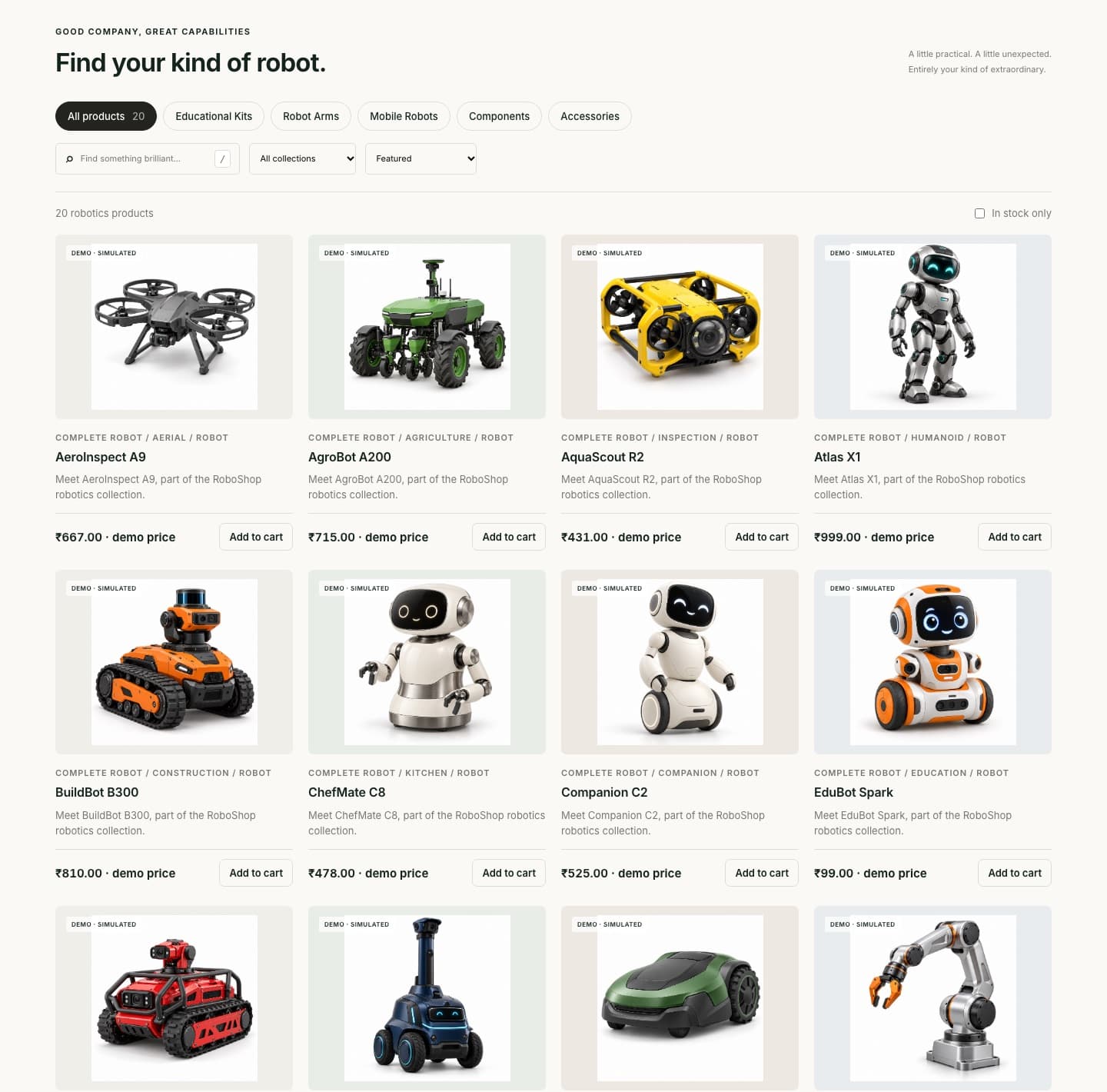
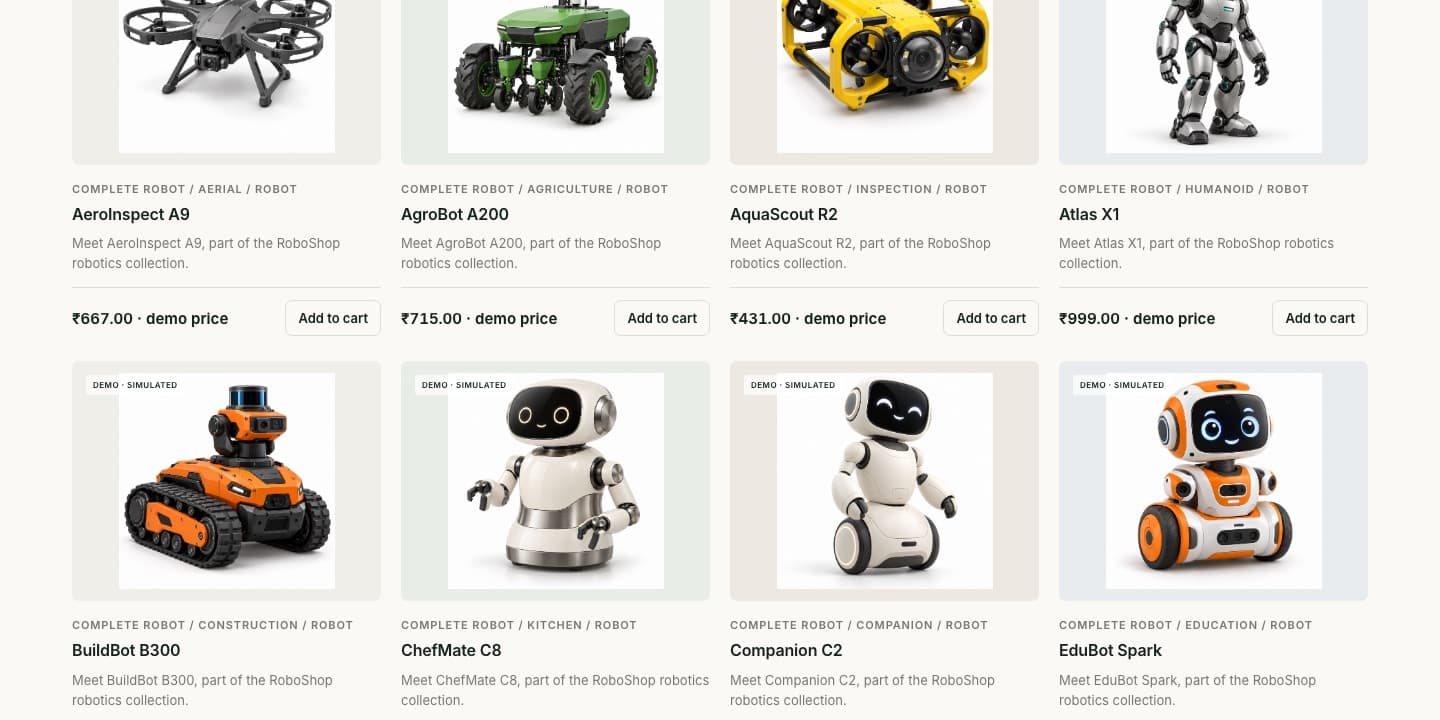
RoboShop AI is a robot store built as a set of independently deployable services. The code is public on GitHub.
Services
| Area | Service | Stack |
|---|---|---|
| Storefront | frontend | TypeScript storefront, product pages, cart and admin UI |
| Edge | nginx | Edge proxy, asset routing and security headers |
| API | ai-gateway | Python: public API routing, authorization and order ledger |
| Accounts | user-service | MongoDB accounts, sessions, MFA and purchase history |
| Catalogue | catalogue-service | MongoDB catalogue reads and validated imports |
| Cart | cart-service | Redis-backed carts |
| Shipping | shipping-service | Java/Gradle with PostgreSQL |
| Payments | payment-service | Razorpay orders and payment verification |
| Assistant | moks | Shopping assistance and recommendations |
| Tools | mcp-server | Diagnostics and Model Context Protocol tools |
Data and messaging run on MongoDB, PostgreSQL, Redis, and RabbitMQ.
Observability
Metrics, logs, and traces are collected with Prometheus, Grafana, Loki/Alloy, the OpenTelemetry Collector, and Jaeger.
Delivery
Each workload has its own Dockerfile and Kubernetes manifest. Images are published to Amazon ECR from GitHub Actions, and applications are deployed from Git through an Argo CD catalog, so the cluster state is reviewed like code.
Related reading
 Kubernetes & Cloud NativeAnalysis
Inside RoboShop AI: microservices on Kubernetes, from Minikube today to an EKS-ready design
How RoboShop AI's storefront, gateway, AI assistant and data services fit together, how it ships to Kubernetes today, and how its EKS stack is designed.
10 min read
Comments
No comments yet. Start the conversation.